
Mercari Japan: Anime Shopping
Mercari, IncShopping
4.135.00 Reviews
- Version
- 1.60.0
- Installs
- 500.00K
- Age Rating
- Mature 17+
Screenshots
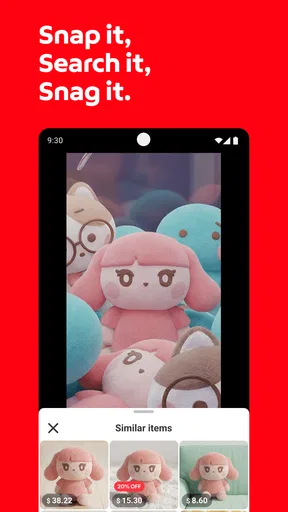
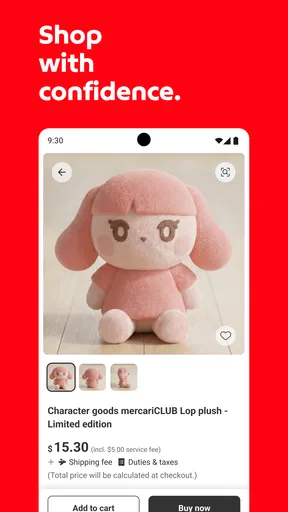
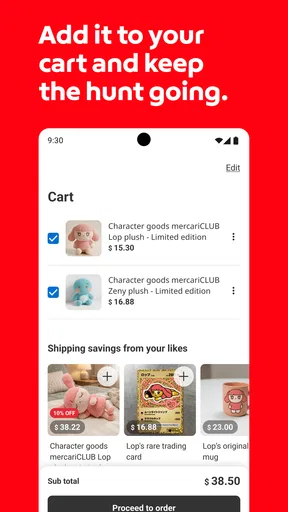
Our Review of Mercari Japan: Anime Shopping
 Analysis by Appyee
I approached Mercari Japan: Anime Shopping as a specialist marketplace rather than a general shopping app. That distinction matters. Its appeal is not simply finding a familiar product and checking out; it is the chance to browse Japanese listings for anime collectibles, trading cards, idol goods, and other fan-focused items that can be difficult to locate in ordinary international stores. The app is free, belongs to the Shopping category, and is developed by Mercari, Inc.
My first impression was that this is most useful when I already know what I am hunting for. A broad search for a character or series can produce a crowded stream of possibilities, while a precise search for a character name, card set, event item, or Japanese product wording is much more productive. I would recommend it to collectors who enjoy comparing individual listings and are willing to inspect details carefully. I would not recommend it as the easiest choice for someone who wants a polished, predictable retail experience.
How I use the marketplace from search to purchase
The basic workflow is straightforward: search for an item, open promising listings, examine the photographs and description, compare condition and seller details, then decide whether the listing deserves closer attention. That sounds familiar, but secondhand anime shopping rewards a slower approach than buying from a conventional store. Two listings that appear to show the same card or character item may differ in condition, included accessories, packaging, or completeness.
I found it helpful to begin with a narrow target instead of scrolling aimlessly. For example, if I wanted a particular trading card, I would combine the character or series name with the card type, release wording, or a distinctive Japanese term visible in other listings. For idol goods, the useful clue might be the event, member, group, or merchandise format. This reduces the temptation to buy the first attractive photograph and makes price comparison more meaningful.
Photographs deserve more attention than the headline. I look for front and back images of cards, close-ups of corners, visible scratches, dents, fading, creases, stains, missing parts, and signs that packaging has been opened. With acrylic stands, badges, figures, and paper goods, I also check whether the pictured item is the complete product or only one part of a larger set. A listing image can be visually persuasive while still leaving an important condition question unanswered.
Descriptions are equally important because the title may be abbreviated. Japanese resale listings often rely on compact wording, fandom shorthand, and condition terms that are obvious to a local collector but less obvious to an overseas buyer. I would rather spend an extra minute interpreting the description than assume that “complete” means the same thing for every product. If the app presents translation help, I treat it as a starting point, not a replacement for checking the original wording and photographs.
One practical habit is to create a small comparison note outside the app while browsing. I record the item type, stated condition, included pieces, seller comments, and the total cost I expect after any additional charges. This is especially useful when several listings use similar photos or nearly identical titles. The cheapest headline price is not automatically the best purchase if the item is incomplete or the condition is unclear.
For a realistic everyday scenario, imagine that I am looking for a specific character badge before a convention. I search by the Japanese character name, then try the series title and merchandise type separately. I open several listings, reject photographs that do not show the back or packaging, and compare condition rather than focusing only on the lowest amount. If I find a suitable listing, I review the transaction details before committing. This process takes more effort than ordering from a large retailer, but it gives me access to a much wider range of fan-to-fan inventory.
Settings and account choices worth checking
I would not rush through the first setup screens. The most important choices are the ones that affect how comfortably I can search, review listings, and manage purchases. I check language-related options, notification preferences, account details, and any available region or delivery settings before beginning serious collecting. A marketplace becomes frustrating when alerts are too frequent, important updates are buried, or the account is not configured for the way I intend to use it.
Notifications are worth treating as a tool rather than leaving every alert enabled. If I am actively looking for a rare item, timely updates can be useful. If I am only browsing, constant notifications can encourage impulse purchases and make the app feel noisier than necessary. I prefer alerts that support a specific search goal and reduce everything that does not help me act.
I also check the purchase and payment screens carefully before placing an order. The key question is not only whether the item can be bought, but whether the full transaction makes sense for my location and circumstances. Delivery availability, payment compatibility, account requirements, and any extra steps can matter more than the listing itself. I would rather discover a limitation before buying than after finding a collectible I have spent time evaluating.
Another useful setting-related habit is keeping my profile information consistent with how I expect to receive purchases. On a resale marketplace, an address or account detail that needs correction can create unnecessary delays. I review those details before a focused shopping session, especially if I have not used the app for a while. This is mundane, but it prevents a good find from becoming an avoidable administration problem.
The mature age rating is also relevant. The app is marked Mature 17+, so I would not treat it as a children’s shopping environment. Parents buying anime or idol goods for younger fans should handle the account and purchasing process themselves rather than assuming that the marketplace is designed for unsupervised use.
Search patterns that make rare goods easier to find
Experienced use depends on repeating a few search patterns. I start with the most specific term I know, then deliberately broaden it when results are too narrow. A character-only search may reveal mixed merchandise, while adding the series, product format, or event can isolate the right listings. If the results are still poor, I reverse the approach: search the series and product type first, then scan for the character.
Japanese spelling can make a major difference. A romanized name may find some listings, but the Japanese title or character name can expose inventory that a Latin-letter search misses. I keep both versions available and try common variations rather than concluding that an item is unavailable after one search. This is one of the clearest differences between browsing this marketplace and shopping on a global retailer with standardized product names.
For trading cards, I search beyond the character. Set names, rarity terms, promotional wording, card numbers, and product abbreviations can be more effective than a general franchise keyword. For idol goods, I use the group, member, tour or event wording, and merchandise category. For collectibles sold in sets, I look for both complete-set terminology and individual-item terminology because sellers may list the same kind of product in very different ways.
I also compare seller-created titles instead of assuming that the first search phrase is universal. One seller may emphasize the character, another the series, and another the event or store source. Once I find one useful listing, I study its wording and reuse the distinctive terms in a new search. This creates a practical feedback loop: every good result teaches me how the next search should be written.
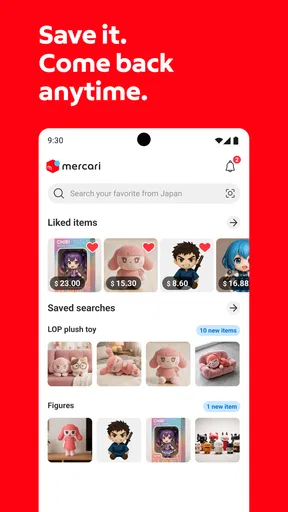
Saved searches or favorites, where available in the current account experience, are most valuable when used selectively. I would not save every vaguely interesting item. I save a precise target, a promising listing, or a search phrase that I expect to revisit. The goal is to build a short watchlist, not another endless feed. If the app’s current options differ by region or account, I rely on the controls actually shown on my device rather than assuming every marketplace feature works identically everywhere.
Version 1.60.0 is the current version I reviewed, and it requires Android 8.0 or later. That makes device compatibility something to check before planning a collecting routine, particularly on an older phone. I would also keep the app updated through the official store so that the interface and account tools match the version being discussed.
Repeatable habits for safer, faster decisions
My fastest reliable pattern is not simply “search and buy.” It is “search, shortlist, verify, compare, then decide.” I usually open several candidates before forming an opinion. This reveals whether a low-priced listing is genuinely attractive or merely missing information that other sellers provide. It also helps me recognize recurring condition language and identify which photographs are detailed enough to support a confident purchase.
I separate discovery from buying. During the first pass, I collect possibilities without making a decision. During the second pass, I inspect condition, included contents, seller information, and transaction details. This two-stage method is particularly useful for rare ACGE goods and trading cards, where excitement can make a scarce-looking listing feel more urgent than it really is.
A second strong habit is searching for the same item in multiple formats. I might search the character plus “badge,” then the series plus “goods,” then the event name plus the member. This can reveal individual listings, bundles, and differently worded duplicates. It also helps me understand whether I am comparing like with like. A bundle may look expensive beside a single item until I notice what it includes.
I pay attention to seller presentation without treating it as a guarantee. Clear photographs, a coherent description, and direct condition notes make a listing easier to evaluate. Vague wording or photographs that avoid important angles make me cautious. I do not infer perfect condition from a clean main image, and I do not assume that a professional-looking title means the item has been authenticated.
For repeat purchases, I keep a personal glossary of useful Japanese terms and abbreviations. I note words connected with unopened packaging, visible damage, missing accessories, unofficial goods, and set contents. This is not an app feature; it is a simple collector workflow that improves with use. It reduces dependence on automatic translation and makes it easier to spot a condition detail that might otherwise be overlooked.
I also set a spending limit before browsing. The marketplace format encourages one-more-search behavior, especially when listings are unusual or tied to a favorite series. A personal limit keeps the app useful for collecting rather than turning every rare discovery into an automatic purchase. If the item is not urgent, I save the listing and revisit it after the initial excitement has passed.
Where the app is strong, and where it becomes difficult
The biggest strength is access to a deep, fan-driven selection. Conventional retailers are better at new, standardized stock, but they rarely offer the same mixture of older merchandise, personal collections, event goods, and individual trading cards. This app is more interesting when I am searching for something specific, discontinued, regionally focused, or simply absent from the usual international shops.
That strength creates the main weakness: consistency is lower than in a conventional store. Listing quality varies, product descriptions may require interpretation, and photographs do not always answer every condition question. The shopping experience depends heavily on my ability to evaluate a seller’s presentation and understand what is actually included. Anyone expecting uniform product pages and identical fulfillment standards may find the process tiring.
There is also a trade-off between rarity and convenience. A hard-to-find idol item may be available here when it is absent elsewhere, but the effort required to search, translate, compare, and confirm the transaction can outweigh the benefit for an ordinary purchase. If I simply want a new, common figure with a clear warranty or predictable delivery, a specialist retailer is usually the better option.
International users should be especially deliberate about the transaction path. I check whether the listing and delivery arrangements suit my location, whether the payment method works for my account, and whether any additional service or delivery steps apply. I do not assume that an app centered on Japanese marketplace inventory provides the same purchasing experience in every country. These checks are not a criticism of the catalog; they are part of using a cross-border-oriented marketplace responsibly.
The app’s average rating is 4.1 from around 2.1 thousand ratings, with 35 written reviews shown alongside it. I read that overall response as encouraging but not conclusive. Marketplace satisfaction depends on the item, seller, delivery route, and the buyer’s expectations, so I pay more attention to my own verification process than to a single score.
Who should use it and who should choose an alternative
I think this is a strong match for anime collectors, trading-card buyers, idol-goods fans, and patient bargain hunters who enjoy the search itself. It is also useful for someone who already understands Japanese product terminology or is prepared to learn a small working vocabulary. The app has passed 500 thousand installs, which gives it a meaningful audience without changing the fact that the quality of individual listings must be judged one by one.
I would steer away from it if I need a guaranteed new product, immediate delivery, simple returns, or a highly standardized checkout. A mainstream retailer is better for those priorities. A dedicated card shop may be preferable when authentication, grading, or specialized condition standards are central to the purchase. A local resale platform may also be easier if domestic shipping and familiar payment methods matter more than access to Japanese inventory.
Cost is another reason to compare alternatives. The app itself is free to install, but that does not mean every purchase is inexpensive. Item cost, delivery, exchange considerations, and any applicable transaction steps all affect the real value. I judge a listing by the complete purchase rather than the number displayed beside the photograph.
My verdict after building a collector’s routine
After using it with a repeatable process, I see Mercari Japan: Anime Shopping as a discovery-heavy marketplace for people who want access to Japanese fan goods and are willing to do careful checking. It rewards precise searches, patient comparison, and a personal system for translating and recording condition details. It is less satisfying when used as a casual, one-tap alternative to a normal retail store.
My recommendation is positive, with a clear condition: approach it like a secondhand marketplace, not a catalog of guaranteed products. Search in Japanese as well as English where appropriate, inspect every image, confirm what is included, review the transaction path for your location, and pause before buying an exciting but poorly documented listing. Those habits make the difference between a rewarding collector’s tool and a frustrating browsing session.
For fans who value rarity and variety, the app offers a shopping experience that ordinary alternatives often cannot match. For shoppers who value simplicity above all else, it may be more work than it is worth. I would keep it on my phone for focused searches, saved targets, and unusual Japanese goods, while using a conventional retailer when I need certainty, speed, and standardized service.
Verdict
Strengths of Mercari Japan: Anime Shopping
- Large selection of Japanese anime and manga merchandise
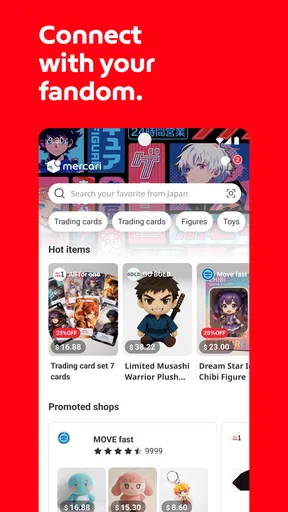
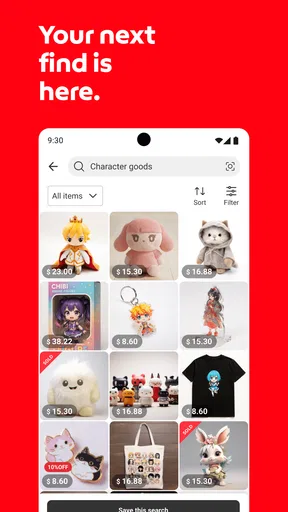
- Useful filters make browsing categories and brands easier
- In-app messaging helps confirm item details with sellers
- Buyer ratings provide helpful insight into seller reliability
- Frequent listings can offer rare items at competitive prices
Limitations of Mercari Japan: Anime Shopping
- Japanese-language interface may be difficult for international users
- Shipping availability and costs vary by seller and destination
- Item condition descriptions may differ between individual sellers
- Popular collectibles can sell out quickly after being listed
- International purchasing may require forwarding or proxy services
Other Releases by Mercari, Inc
View All
Mercari: Buy and Sell App
Shopping4.7
Similar Picks in This Category
View All
SHEIN-Shopping Online
Roadget Business PTE. LTD.4.8

Amazon Shopping
Amazon Mobile LLC4.4


Mercado Libre: Compras online
Mercado Libre4.8

Wish: Shop and Save
Wish US Holdings LLC4.7

Alibaba.com - B2B marketplace
Alibaba Mobile4.4
Frequently Asked Questions
What is Mercari Japan: Anime Shopping, and what can I buy there?
Mercari Japan is a marketplace focused on secondhand goods, including anime merchandise, manga, figures, trading cards, character goods, collectibles, games, and limited-edition releases. Listings are created by individual sellers, so inventory, prices, and item condition vary considerably. Before buying, review the photographs, description, seller information, included accessories, and any notes about damage or authenticity.
Can users outside Japan purchase items from Mercari Japan?
International availability depends on the version of the service and the purchasing method being used. Mercari Japan has traditionally been designed mainly for buyers and sellers in Japan, so overseas users may need an authorized proxy-shopping or forwarding service. These services can place the order locally and then ship it internationally, but they may add service fees, domestic shipping, international postage, and other charges.
Are Mercari Japan listings available in English?
Most Mercari Japan listings are written in Japanese, although some product titles may include English words, especially for popular anime, games, brands, and character names. Users who do not read Japanese may need translation tools to understand descriptions, condition notes, seller comments, and shipping details. Automatic translations can be imperfect, so important information should be checked carefully before completing a purchase.
How can I check whether an anime item is authentic and in good condition?
Mercari Japan is a peer-to-peer marketplace, so buyers should evaluate each listing rather than assuming every collectible is official or flawless. Inspect all photos, compare the item with known official designs, read the description for terms such as replica, unofficial, damaged, missing parts, or junk, and review the seller’s history. For expensive figures, cards, or rare goods, additional research is strongly recommended.
What extra costs should I expect when buying from Mercari Japan?
The displayed item price may not represent the total amount you will pay, particularly when purchasing from outside Japan. Depending on the route used, additional costs can include a buyer or proxy fee, Japanese domestic shipping, international shipping, storage or consolidation fees, payment charges, customs duties, and local taxes. Check the complete estimate before ordering, especially for bulky or fragile merchandise.
